Focus on carbon equipment
Focus on carbon equipment


There are differences between coconut shell charcoal and activated carbon in many aspects, which are introduced in detail below:

1. Different raw materials
Coconut shell charcoal, also known as coconut shell activated carbon, is an adsorption material made from coconut shell as raw material and refined through high-temperature activation.
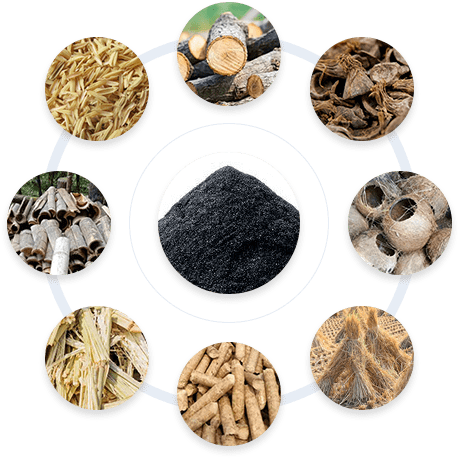
Activated carbon can use a variety of raw materials, including wood, coal, fruit shells (such as coconut shells, but not limited to coconut shells), etc., and is also made through a high-temperature activation process.
2. Different product characteristics
Coconut shell charcoal: low density, light feel, larger volume than coal activated carbon of the same type, regular particle shape, smooth surface, good acid and alkali resistance, low ash and low pollution characteristics. Coconut shell charcoal belongs to the small molecule pore structure with strong adsorption capacity and excellent physical and chemical indicators.
Activated carbon: irregular shape, rough surface, its physical and chemical properties depend on the production method, raw material selection and activation process. It has a developed pore structure, a large specific surface area and rich surface chemical genes, strong adsorption capacity, high specificity, and good repeatability and practicality.
3. Different application fields
Coconut shell charcoal: commonly used in biomedicine, food and beverage and other fields, because it is natural, environmentally friendly, low pollution, and does not need to add any chemical reagents during the high-temperature carbonization process, retaining natural organic matter, harmless to the human body, and will not affect the color and taste. It is also used in gas masks, cigarette filters, refrigerator deodorizers, automobile exhaust treatment devices, etc. to remove toxic components, components that are harmful to the human body or components with odor. It is also widely used in air purification, water purification, chemical catalysts and carriers.
Activated carbon: widely used in industrial fields such as water purification, air purification, catalysts, etc., can effectively remove organic matter and odor in industrial waste gas and wastewater, and is also used in electrodes, flue gas treatment and other fields.
Therefore, although coconut shell charcoal and activated carbon are both adsorption materials, there are significant differences in raw materials, product characteristics and application fields. In actual applications, enterprises should choose appropriate adsorption materials according to actual needs to achieve the best adsorption effect. Zhengzhou Dingli New Energy Equipment Co., Ltd. is a manufacturer specializing in the production of coconut shell charcoal and activated carbon. If you have any equipment needs, please feel free to contact us by phone!

We are delighted to announce that Dingli Group will be participating in the upcoming PalmEX to be held in Jakarta, Indonesia.
A continuous biomass carbonization plant is an innovative solution for transforming agricultural residues and forestry waste into renewable energy products. By utilizing pyrolysis technology, the plant converts organic materials into biochar, combustible
Agricultural waste recycling has become a critical component of modern environmental management. A biomass continuous carbonization machine transforms crop residues into valuable biochar, providing a sustainable alternative to open burning and landfill di
A continuous biochar production line combining carbonization and pyrolysis technology represents a modern approach to biomass processing. Continuous carbonization equipment functions as the core unit within this system, ensuring stable throughput and cons