Focus on carbon equipment
Focus on carbon equipment


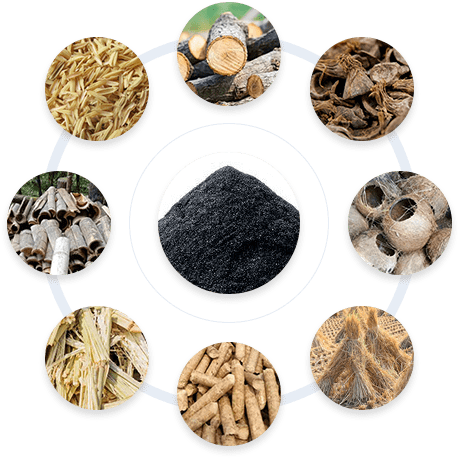
Dingli Group's continuous carbonization furnace can be used to process rice husk charcoal. The continuous carbonization furnace is a drum carbonization furnace with a horizontal structure.

The continuous carbonization machine heats the carbonization furnace first, and after reaching the carbonization temperature, it starts feeding from the feed port, and the raw materials are not pre-loaded into the furnace. During the process of raw materials entering the carbonization furnace, it is necessary to ensure the sealing of the feed port and the anaerobic carbonization in the main furnace, so the raw materials should not be too large, so branches, logs, etc. need to be crushed, and the size should not be too large, generally less than 2 cm . After the raw material enters the carbonization furnace, it moves with the rotation of the carbonization furnace, and slowly moves from the feed port to the carbon outlet. The specific time can be set, generally about 30 minutes. When the raw material moves to the carbon outlet, the carbonization is basically completed, and then from the At the carbon outlet, the carbon outlet should also pay attention to sealing. The continuous carbonization machine can run continuously for 24 hours, with continuous feeding and continuous carbonization. One ton of rice husk produces about 0.25 tons of rice husk carbon. Dingli Group's continuous carbonization furnace can process about 20-100 tons of rice husk a day.
The carbonization furnace is a double-tube double-hearth structure, which is divided into an inner cylinder and an outer cylinder. Compared with a single-tube carbonization furnace, the length of the carbonization furnace is reduced by nearly half. The raw material first enters the inner cylinder of the carbonization furnace, and the temperature of the inner cylinder is relatively low. With the rotation of the main furnace, the material moves horizontally under the action of the diversion spiral, and then falls into the outer cylinder. The temperature of the outer cylinder is higher, and the direction of the spiral is flat. Contrary to the inner cylinder, the material moves back horizontally. When the carbonization is completed, it just moves to the carbon outlet at the bottom of the carbonization furnace and enters the carbon outlet. The carbon outlet is cooled by circulating water, and the carbonized raw materials are cooled to normal temperature. Carbon out.
We are delighted to announce that Dingli Group will be participating in the upcoming PalmEX to be held in Jakarta, Indonesia.
A continuous biomass carbonization plant is an innovative solution for transforming agricultural residues and forestry waste into renewable energy products. By utilizing pyrolysis technology, the plant converts organic materials into biochar, combustible
Agricultural waste recycling has become a critical component of modern environmental management. A biomass continuous carbonization machine transforms crop residues into valuable biochar, providing a sustainable alternative to open burning and landfill di
A continuous biochar production line combining carbonization and pyrolysis technology represents a modern approach to biomass processing. Continuous carbonization equipment functions as the core unit within this system, ensuring stable throughput and cons