Focus on carbon equipment
Focus on carbon equipment


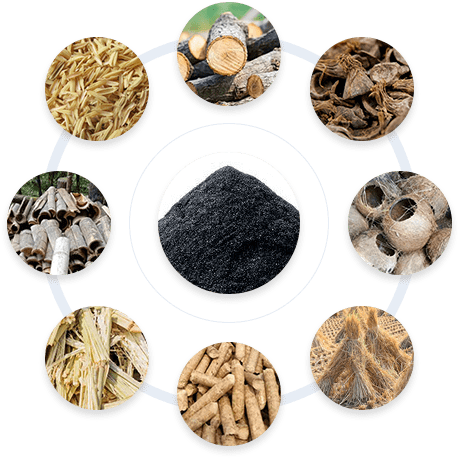
Against the backdrop of increasingly urgent global environmental protection needs, activated carbon, as an efficient adsorption material, has become a core solution in the fields of water treatment and air purification. Palm shells, a common agricultural waste in tropical regions, are becoming an ideal raw material for activated carbon production due to their unique physical and chemical properties.
1. carbon reduction in the entire cycle from production to disposal:The environmental properties of palm shell activated carbon run through the entire life cycle. Low carbonization in the production process: The volatile matter produced by palm shell carbonization can be recycled as fuel, reducing fossil energy consumption. Strong regeneration ability: Through high-temperature steam activation method, it can be reused 3-5 times to extend the service life of the product. Terminal degradation friendly: Failed activated carbon can be safely landfilled, and its porous structure can also improve soil permeability and help ecological restoration.
2. The value of agricultural waste has increased:Compared with traditional coal-based activated carbon, palm shell activated carbon has significant cost advantages: palm shell has a low moisture content (about 15%-20%), which can reduce carbonization energy consumption and shorten the production cycle. Taking an activated carbon factory in Indonesia as an example, after switching to palm shell raw materials, the production cost decreased by 28% and the product profit margin increased by 17%.

3. the "natural gene" of adsorption efficiency:The fiber structure of palm shells is dense and rich in lignin, and rich micropores and mesopores can be formed during high-temperature carbonization and activation. Experimental data show that the specific surface area of palm shell activated carbon can reach 1200-1500㎡/g, far exceeding coal-based activated carbon (about 800㎡/g), significantly improving the adsorption efficiency of organic pollutants and heavy metal ions.
4. solving the problem of waste disposal:The global palm oil industry produces millions of tons of palm shell waste each year. Traditional treatment methods are mostly open-air stacking or incineration, which not only occupies land, but also releases greenhouse gases and dust pollution. Converting it into activated carbon through pyrolysis carbonization technology can achieve efficient recycling of resources.
The rise of palm shell activated carbon marks a new stage in the development of environmentally friendly materials, which is to "turn waste into treasure". With the continuous optimization of carbonization technology and the advancement of global carbon neutrality goals, this green material will replace traditional activated carbon in more fields. As a provider of carbonization technology solutions, we will continue to develop high-efficiency and low-consumption equipment to help customers seize the new blue ocean of the environmental protection industry.
If you are interested in our machines, please contact us.
We are delighted to announce that Dingli Group will be participating in the upcoming PalmEX to be held in Jakarta, Indonesia.
A continuous biomass carbonization plant is an innovative solution for transforming agricultural residues and forestry waste into renewable energy products. By utilizing pyrolysis technology, the plant converts organic materials into biochar, combustible
Agricultural waste recycling has become a critical component of modern environmental management. A biomass continuous carbonization machine transforms crop residues into valuable biochar, providing a sustainable alternative to open burning and landfill di
A continuous biochar production line combining carbonization and pyrolysis technology represents a modern approach to biomass processing. Continuous carbonization equipment functions as the core unit within this system, ensuring stable throughput and cons