Focus on carbon equipment
Focus on carbon equipment


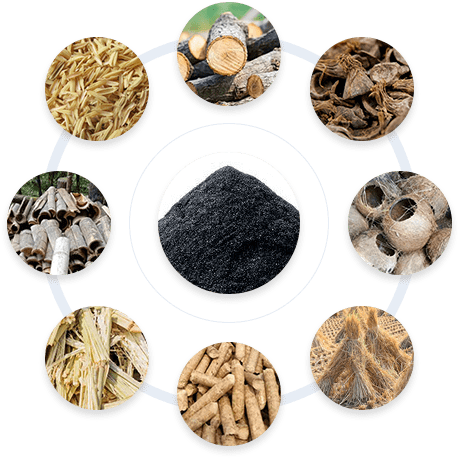
The coconut shell carbonization machine is not only a processing equipment, but also a transformation center for resource upgrading! It uses an integrated continuous process to turn low-value waste into multi-category "black gold" in one step:

Unique integrated pipeline design, no pre-drying step required! Wet coconut shells with a moisture content of less than 30% are directly put into the carbonization machine, and dehydration, drying and deep pyrolysis are completed simultaneously in the winding high-temperature pipeline. The raw materials undergo a gradient temperature rise of 300~600℃ in an oxygen-free environment, the cellulose structure is orderly decomposed, impurities are volatilized, and a high-carbon skeleton is left - this is the key leap in the birth of high-quality biochar!
Precise control of temperature and residence time determines the ultimate value of carbon products. Short-term medium temperature (about 400℃) produces loose porous carbon, which is suitable for soil improvement or activated carbon substrate; high temperature delay (500℃+) generates dense high calorific value fuel carbon, and the thermal efficiency is increased by 35%. Fine-tuning the parameters of one machine can flexibly adapt to multiple market needs.
The hot charcoal enters the circulating water-cooled spiral belt, and cools from red to room temperature within 30 seconds, perfectly preserving the activity of the charcoal structure. The produced charcoal powder can be directly packaged as fuel, or pressed into blocks to make clean barbecue charcoal; if it is activated for the second time, it can be upgraded to an industrial adsorbent, doubling its value!
Dingli coconut shell carbonization machine is a wealth-creating engine that uses simplicity to control complexity. Start now and let the waste coconut shell embark on the value-added express train to the "Black Gold Hall"!
We are delighted to announce that Dingli Group will be participating in the upcoming PalmEX to be held in Jakarta, Indonesia.
A continuous biomass carbonization plant is an innovative solution for transforming agricultural residues and forestry waste into renewable energy products. By utilizing pyrolysis technology, the plant converts organic materials into biochar, combustible
Agricultural waste recycling has become a critical component of modern environmental management. A biomass continuous carbonization machine transforms crop residues into valuable biochar, providing a sustainable alternative to open burning and landfill di
A continuous biochar production line combining carbonization and pyrolysis technology represents a modern approach to biomass processing. Continuous carbonization equipment functions as the core unit within this system, ensuring stable throughput and cons