Focus on carbon equipment
Focus on carbon equipment


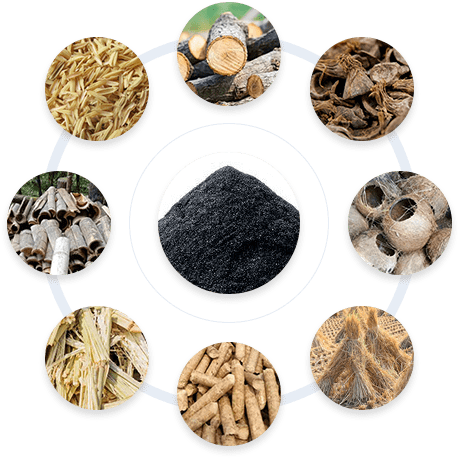
The working principle of the coconut shell carbonizer is a carefully designed conversion path. It transforms hard coconut shells into widely used coconut shell charcoal efficiently and cleanly through a specific physical and chemical environment, revealing the inner mystery from raw materials to refined charcoal.

Closed pyrolysis, core conversion stage. The coconut shell is fed into the closed reaction space of the carbonizer. Under external continuous heating or internal self-sustaining hot atmosphere, the coconut shell undergoes stages such as drying, pre-carbonization, carbonization and calcination (cooling). The core carbonization stage occurs in a specific high temperature range (far below the combustion temperature). In an oxygen-deficient environment, the organic components of the coconut shell undergo complex reactions such as cracking, polycondensation, and dehydrogenation, volatile substances escape, and the fixed carbon skeleton gradually forms and stabilizes.
Product control to obtain ideal quality. By accurately controlling the temperature curve, reaction time, and furnace atmosphere (mainly the degree of oxygen deficiency), the carbonizer effectively guides the path of the pyrolysis reaction. This ensures that the final solid product - coconut shell charcoal has an ideal carbon content, developed pore structure, suitable mechanical strength and stable chemical properties, laying a quality foundation for subsequent applications (such as activated carbon raw materials, fuels, and soil conditioners).
Mastering this principle, you can understand how coconut shell carbonization machine can become an efficient bridge connecting waste coconut shell resources with high value-added charcoal products.
We are delighted to announce that Dingli Group will be participating in the upcoming PalmEX to be held in Jakarta, Indonesia.
A continuous biomass carbonization plant is an innovative solution for transforming agricultural residues and forestry waste into renewable energy products. By utilizing pyrolysis technology, the plant converts organic materials into biochar, combustible
Agricultural waste recycling has become a critical component of modern environmental management. A biomass continuous carbonization machine transforms crop residues into valuable biochar, providing a sustainable alternative to open burning and landfill di
A continuous biochar production line combining carbonization and pyrolysis technology represents a modern approach to biomass processing. Continuous carbonization equipment functions as the core unit within this system, ensuring stable throughput and cons