Focus on carbon equipment
Focus on carbon equipment


In the pursuit of smokeless, efficient charcoal production, sawdust carbonization furnaces, with their superior performance and significant advantages, have become an inevitable choice for industry upgrades. They not only address the pain point of smoke emissions but also bring about profound changes in production methods.

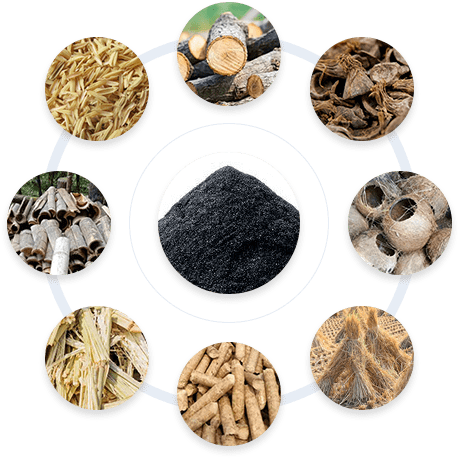
Operational convenience is a key highlight of sawdust carbonization furnaces. The equipment features a high degree of automation, enabling continuous or semi-continuous operation of the feeding, carbonization, cooling, and charcoal discharge processes, significantly reducing the intensity and complexity of manual operations and improving production efficiency. Even biomass waste can be easily transformed into high-value charcoal products.
The core of this smokeless production lies in the deep exploration of flue gas value. Fume generated by the furnace is not directly discharged, but instead is channeled through a scientifically designed piping system into a secondary combustion chamber or purification unit. The combustible components are fully burned and utilized, converted into heat energy that is fed back into the system; the remaining trace gases are treated and discharged to meet emission standards, truly achieving a clean production process.
Sawdust carbonization furnaces not only produce high-quality, smokeless charcoal but also represent the direction of resource recycling and sustainable development. It turns agricultural and forestry waste into treasure, reduces the pressure of deforestation, and is an ideal production equipment that conforms to the trend of green and low-carbon development, with significant investment value.
We are delighted to announce that Dingli Group will be participating in the upcoming PalmEX to be held in Jakarta, Indonesia.
A continuous biomass carbonization plant is an innovative solution for transforming agricultural residues and forestry waste into renewable energy products. By utilizing pyrolysis technology, the plant converts organic materials into biochar, combustible
Agricultural waste recycling has become a critical component of modern environmental management. A biomass continuous carbonization machine transforms crop residues into valuable biochar, providing a sustainable alternative to open burning and landfill di
A continuous biochar production line combining carbonization and pyrolysis technology represents a modern approach to biomass processing. Continuous carbonization equipment functions as the core unit within this system, ensuring stable throughput and cons