Focus on carbon equipment
Focus on carbon equipment


As an innovative environmentally friendly technology, carbonizers can transform a variety of organic materials into high-value products through pyrolysis. Understanding which materials are suitable for pyrolysis can help companies better select equipment and achieve their sustainability goals.

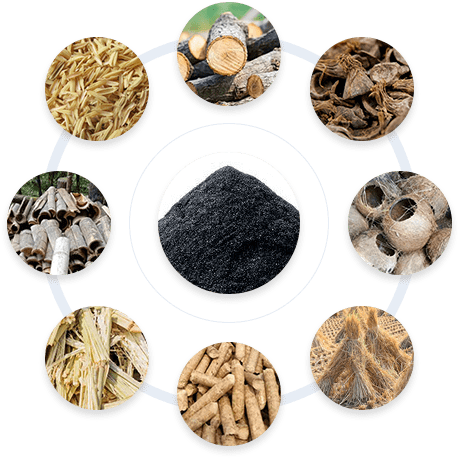
Biomass resources are highly recommended. Agricultural and forestry waste, such as sawdust, coconut shells, and sugarcane bagasse, are highly pyrolyzed due to their high cellulose and lignin content. The biochar produced by carbonizing these materials is porous and can be used as an adsorbent or soil remediation agent, with promising market prospects.
Industrial byproducts are also suitable for carbonization. For example, waste residues from traditional Chinese medicine factories, distilleries, and edible oil plants, as well as natural fibers discarded from the textile industry, are ideal carbonization feedstocks. Pyrolysis not only avoids secondary pollution but also allows for the extraction of energy and chemical raw materials, enhancing the value of the industrial chain.
In addition, pre-treated municipal sludge and sorted organic household waste are emerging as new applications for carbonizers. These materials have moderate calorific value and complex composition. Carbonizers use high-temperature pyrolysis to effectively kill pathogens and solidify heavy metals, achieving the dual goals of harmlessness and resource recovery.
Choosing a carbonizer means choosing an efficient, flexible, and sustainable method for waste treatment. Whether you're an agricultural operator, industrial producer, or environmental service provider, carbonizers can help you transform your materials and increase their value.
We are delighted to announce that Dingli Group will be participating in the upcoming PalmEX to be held in Jakarta, Indonesia.
A continuous biomass carbonization plant is an innovative solution for transforming agricultural residues and forestry waste into renewable energy products. By utilizing pyrolysis technology, the plant converts organic materials into biochar, combustible
Agricultural waste recycling has become a critical component of modern environmental management. A biomass continuous carbonization machine transforms crop residues into valuable biochar, providing a sustainable alternative to open burning and landfill di
A continuous biochar production line combining carbonization and pyrolysis technology represents a modern approach to biomass processing. Continuous carbonization equipment functions as the core unit within this system, ensuring stable throughput and cons