Focus on carbon equipment
Focus on carbon equipment


With the accelerating pace of urbanization, solid waste disposal has become a daunting challenge. Traditional landfill and incineration methods not only consume significant land resources but can also cause secondary pollution. Against this backdrop, the emergence of multifunctional carbonizers offers a new, efficient, and green path for urban solid waste management.

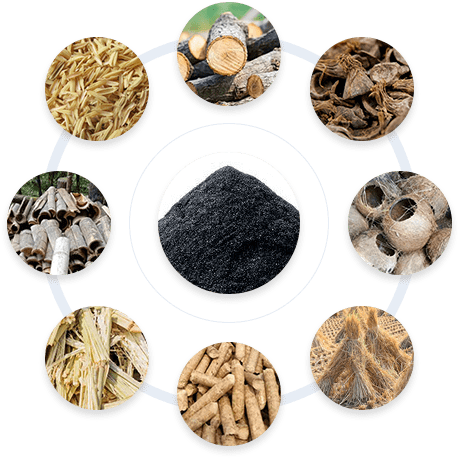
The carbonizer's core advantage lies in its exceptional versatility. It can efficiently convert a variety of organic wastes, such as household garbage, sewage sludge, and agricultural and forestry waste, into high-value-added biochar through high-temperature, anoxic pyrolysis technology. This process reduces waste volume and renders it harmless. More importantly, it transforms waste from "waste" into "resource," truly embodying the circular economy concept of "turning waste into treasure."
The benefits of this transformation are far-reaching. The biochar produced has a wide range of uses, from soil conditioners to improve soil fertility to clean energy, replacing some fossil fuels. The entire process is clean and environmentally friendly, significantly reducing greenhouse gas and hazardous substance emissions. Choosing our carbonizer is not just choosing a piece of equipment; it's choosing a sustainable future.
Embracing carbonization technology means we're actively contributing to a cleaner, greener urban environment. Let the multifunctional carbonizer become your partner in solving solid waste challenges, creating both economic and environmental value, and working together towards a sustainable future of resource recycling.
We are delighted to announce that Dingli Group will be participating in the upcoming PalmEX to be held in Jakarta, Indonesia.
A continuous biomass carbonization plant is an innovative solution for transforming agricultural residues and forestry waste into renewable energy products. By utilizing pyrolysis technology, the plant converts organic materials into biochar, combustible
Agricultural waste recycling has become a critical component of modern environmental management. A biomass continuous carbonization machine transforms crop residues into valuable biochar, providing a sustainable alternative to open burning and landfill di
A continuous biochar production line combining carbonization and pyrolysis technology represents a modern approach to biomass processing. Continuous carbonization equipment functions as the core unit within this system, ensuring stable throughput and cons