Focus on carbon equipment
Focus on carbon equipment


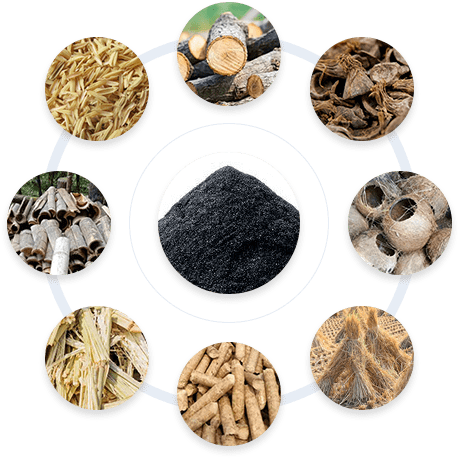
The carbonization machine plays an indispensable role in converting sawdust into high-value charcoal. This transformation is not a simple physical change, but a qualitative leap under specific conditions, fully tapping the potential of waste biomass.
The foundation for efficient conversion is creating a controlled pyrolysis environment. The carbonization machine needs to form and maintain a high-temperature, oxygen-deficient space. In this environment, the lignocellulosic fibers and other organic matter in the sawdust decompose, volatile components escape, and what remains is highly carbon-enriched charcoal. This process determines the product's fixed carbon content and energy density.

Besides the core reaction environment, the preparation of raw materials also affects the quality of the final product. The purity, particle size, and dryness of the sawdust are directly related to the energy consumption, efficiency, and appearance of the charcoal during the carbonization process. Clean, dry raw materials with suitable particle size help produce high-quality charcoal with fewer impurities, higher hardness, and stable calorific value.
Ultimately, the carbonization machine produces more than just charcoal itself. Byproducts collected during carbonization, such as wood vinegar and wood tar, also have wide applications, achieving full utilization of biomass raw materials and improving the economic efficiency of the entire production process.
Therefore, the carbonization machine is not merely a production device, but a platform for value creation. Through precise condition control, it upgrades low-value sawdust into energy charcoal and various chemical byproducts, providing a practical technological path for circular economy and sustainable development.
We are delighted to announce that Dingli Group will be participating in the upcoming PalmEX to be held in Jakarta, Indonesia.
A continuous biomass carbonization plant is an innovative solution for transforming agricultural residues and forestry waste into renewable energy products. By utilizing pyrolysis technology, the plant converts organic materials into biochar, combustible
Agricultural waste recycling has become a critical component of modern environmental management. A biomass continuous carbonization machine transforms crop residues into valuable biochar, providing a sustainable alternative to open burning and landfill di
A continuous biochar production line combining carbonization and pyrolysis technology represents a modern approach to biomass processing. Continuous carbonization equipment functions as the core unit within this system, ensuring stable throughput and cons