Focus on carbon equipment
Focus on carbon equipment


Looking to the future, we aspire to build an ecological society with zero waste emissions and recyclable resources. Carbonization machines serve as a solid bridge connecting the present with this beautiful vision, giving the word "waste" a completely new definition.

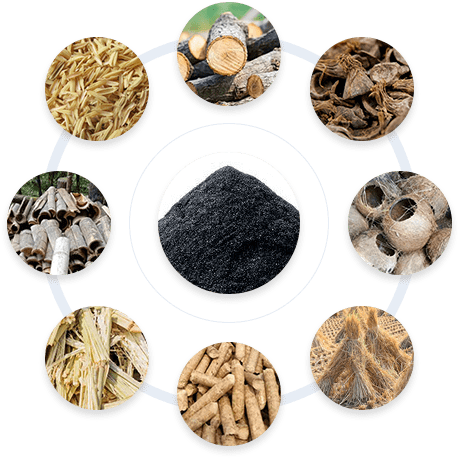
From the perspective of carbonization machines, there is no true "garbage," only misplaced resources. Agricultural residues, forestry processing waste, and urban organic waste are no longer burdens urgently needing disposal, but rather "urban mines" waiting to be revitalized. Through carbonization technology, these substances are given a second life.
The product, biochar, can be called "black gold." It is not only a high-quality soil conditioner that can fix carbon and fertilize fields, but it can also be used as an industrial raw material and an environmental adsorbent, with a very broad application prospect. This means that we are not only dealing with pollution sources, but also actively creating a new starting point for resources.
The profound significance of carbonization machines lies in the clear path they outline for us. They tell us that human progress does not have to come at the expense of the environment. Through technology and intelligence, we are fully capable of turning the end point of linear development into the starting point of circular regeneration, thereby moving towards a cleaner and more sustainable future.
We are delighted to announce that Dingli Group will be participating in the upcoming PalmEX to be held in Jakarta, Indonesia.
A continuous biomass carbonization plant is an innovative solution for transforming agricultural residues and forestry waste into renewable energy products. By utilizing pyrolysis technology, the plant converts organic materials into biochar, combustible
Agricultural waste recycling has become a critical component of modern environmental management. A biomass continuous carbonization machine transforms crop residues into valuable biochar, providing a sustainable alternative to open burning and landfill di
A continuous biochar production line combining carbonization and pyrolysis technology represents a modern approach to biomass processing. Continuous carbonization equipment functions as the core unit within this system, ensuring stable throughput and cons