Focus on carbon equipment
Focus on carbon equipment


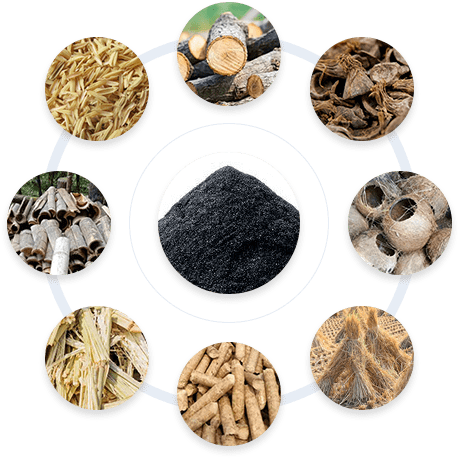
The allure of continuous carbonization technology lies in its ability to penetrate the capillaries of social production, transforming organic waste from various sources and in diverse forms into resources that drive green development. The following panoramic view showcases how it creates significant value in different fields:
In vast agricultural and forestry production areas, straw burning was once a major cause of smog, and the accumulation of forestry processing residues also posed a problem. Continuous carbonization equipment can convert this biomass into biochar on a large scale and rapidly. Biochar returned to the fields can improve soil structure, retain water and fertilizer, fix carbon, and reduce emissions, contributing to ecological agriculture; high-quality biochar can be further processed into carbon-based fertilizers, feed additives, or used as insulation coverings in the smelting industry. A single production line can create a perfect closed loop of "agricultural and forestry waste - biochar - feeding back into agriculture and forestry."

Sludge produced by urban wastewater treatment plants has a high water content, is expensive to dispose of, and is prone to secondary pollution. Continuous carbonization equipment, through efficient drying and pyrolysis, can reduce its volume by more than 90% and kill all pathogens. The resulting sludge char can be used as a building material raw material or co-fuel in cement kilns, achieving complete harmlessness and resource utilization. This technology is also a preferred path for achieving efficient energy recovery and volume reduction for organic components separated from municipal solid waste.
Fruit shells from food processing plants, distiller's grains from wineries, medicinal residues from traditional Chinese medicine factories, sludge from paper mills… these industrial organic byproducts are rich in carbon. Continuous carbonization equipment can transform them into higher-value activated carbon raw materials or specialized carbon materials. For example, coconut shell and peach shell char is an excellent raw material for manufacturing high-end activated carbon; distiller's grains char can be used for wastewater treatment or soil remediation. This directly transforms a company's environmental cost center into a new profit growth point.
Each scenario is a vivid example of how continuous carbonization equipment transforms environmental challenges into economic opportunities. It transcends the function of a single piece of equipment, playing the role of a "circular economy hub," providing customized comprehensive waste solutions for customers in different industries. Whether your pain points lie in waste disposal costs, environmental pressures, or the search for new resource-based products, continuous carbonization technology may hold the key.
We are delighted to announce that Dingli Group will be participating in the upcoming PalmEX to be held in Jakarta, Indonesia.
A continuous biomass carbonization plant is an innovative solution for transforming agricultural residues and forestry waste into renewable energy products. By utilizing pyrolysis technology, the plant converts organic materials into biochar, combustible
Agricultural waste recycling has become a critical component of modern environmental management. A biomass continuous carbonization machine transforms crop residues into valuable biochar, providing a sustainable alternative to open burning and landfill di
A continuous biochar production line combining carbonization and pyrolysis technology represents a modern approach to biomass processing. Continuous carbonization equipment functions as the core unit within this system, ensuring stable throughput and cons