Focus on carbon equipment
Focus on carbon equipment


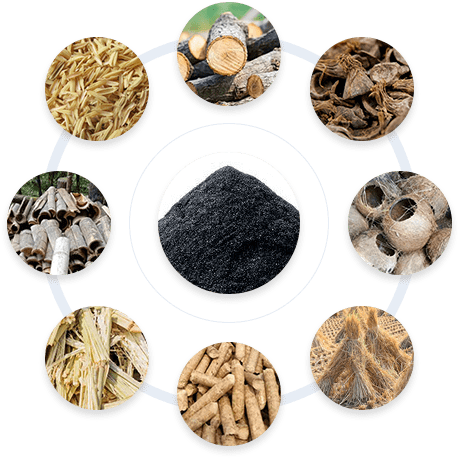
The continuous hemp stalk carbon powder machine can complete the carbonization of raw materials from drying to carbonization at one time. It is mainly used for: peanut shells, sawdust, corn stalks, bagasse, branches, rice husks, bamboo chips, sorghum stalks, sunflower seed shells, distiller's grains, Corn cobs, sorghum stalks, coconut shells, apricot shells, peanut shells, coffee grounds, cotton stalks, bean stalks, potato grass, dead leaves, traditional Chinese medicine residue, sludge, domestic waste and other materials with biomass properties are carbonized. The continuous hemp stalk carbonization machine is also called coconut shell carbonization furnace, rice husk carbonization furnace, straw carbonization furnace, wood chip carbonization furnace, bamboo chip carbonization furnace, etc.

Advantages of continuous hemp stalk toner machine:
1. The volume of the main machine is large, the carbonization rate is high, and the production capacity is strong. It can carbonize 0.5-2 tons per hour.
2. Low cost, low cost, and strong practicability, which meet the investment requirements of early entrepreneurs.
All internal parts of the continuous hemp stalk carbon powder machine are made of special high-temperature-resistant precious metal steel, which is durable, non-deformable, non-oxidative, and has good thermal insulation performance. The machine is easy to operate, safe and reliable. The company's independent R&D team carefully develops and produces The continuous hemp stalk carbon powder machine manufactured is reliable in quality, high in output and good in effect.
We are delighted to announce that Dingli Group will be participating in the upcoming PalmEX to be held in Jakarta, Indonesia.
A continuous biomass carbonization plant is an innovative solution for transforming agricultural residues and forestry waste into renewable energy products. By utilizing pyrolysis technology, the plant converts organic materials into biochar, combustible
Agricultural waste recycling has become a critical component of modern environmental management. A biomass continuous carbonization machine transforms crop residues into valuable biochar, providing a sustainable alternative to open burning and landfill di
A continuous biochar production line combining carbonization and pyrolysis technology represents a modern approach to biomass processing. Continuous carbonization equipment functions as the core unit within this system, ensuring stable throughput and cons