Focus on carbon equipment
Focus on carbon equipment


Most people like to eat nuts and other foods in daily life, and food factories produce a large amount of nut meat every year. So what should be done with the remaining husks after the pulp is removed? It would be a shame to dispose of it as garbage. The smart boss discovered a business opportunity, which was to use the carbonized fruit shells to make activated carbon, which could kill two birds with one stone.
Continuous shell carbonization furnace;
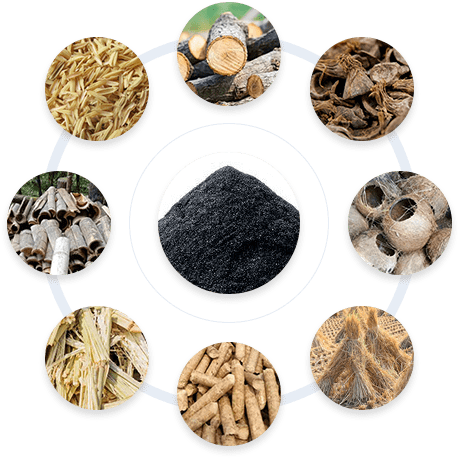
The continuous fruit shell carbonization furnace can carbonize many materials, such as coconut shells, peach shells, apricot shells, date shells, palm shells, walnut shells, macadamia nut shells, olive pits, etc. Some canneries and fruit product processing plants have them every year There are a lot of fruit shell resources. Fruit shells are actually very good raw materials for carbonization. High value can be generated by carbonizing fruit shells.

Nutshell activated carbon production method;
First, the shells need to be roasted to remove the oil and moisture. The roasted shells are then placed in a furnace for carbonization. This process needs to be carried out in an oxygen-free environment. "Holes" will be formed on the surface of the carbonized fruit shell. These holes can reduce the density of activated carbon and increase the surface area of the adsorbent material, thereby giving the activated carbon better adsorption performance. Next, the carbonized shell needs to be chemically activated. This process typically uses phosphoric acid or potassium hydroxide. Chemical activation can strengthen the pore structure and add surface functional groups, which can absorb more pollutants and odors.
Finally, the treated activated carbon needs to be washed and dried. Washing aims to remove residual chemicals and other impurities, while drying is to prevent moisture and impurities from causing secondary contamination. Therefore, the production process needs to be strictly controlled to ensure that the final activated carbon is both environmentally friendly and efficient.
We are delighted to announce that Dingli Group will be participating in the upcoming PalmEX to be held in Jakarta, Indonesia.
A continuous biomass carbonization plant is an innovative solution for transforming agricultural residues and forestry waste into renewable energy products. By utilizing pyrolysis technology, the plant converts organic materials into biochar, combustible
Agricultural waste recycling has become a critical component of modern environmental management. A biomass continuous carbonization machine transforms crop residues into valuable biochar, providing a sustainable alternative to open burning and landfill di
A continuous biochar production line combining carbonization and pyrolysis technology represents a modern approach to biomass processing. Continuous carbonization equipment functions as the core unit within this system, ensuring stable throughput and cons