Focus on carbon equipment
Focus on carbon equipment


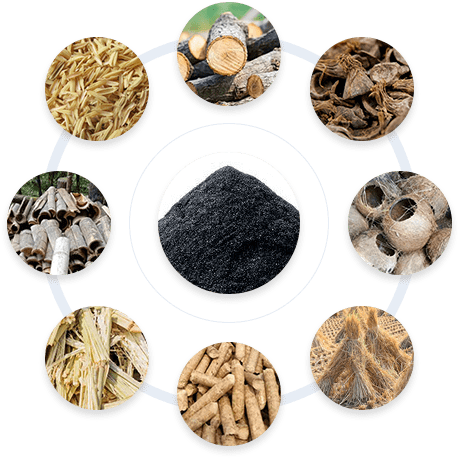
Dingli biomass charcoal briquetting production line is to crush raw materials such as coconut shell, palm shell, rice husk, wood chips, etc. into granules within 10mm through a crusher, and put them into a carbonization furnace for carbonization and carbon powder after being dried by a dryer. Briquetting machine A machine for briquetting. The charcoal produced by the biomass charcoal machine has high density, small size and good flammability, which can be used as barbecue charcoal.

Dingli biomass charcoal briquetting production line includes: pulverizer, dryer, carbonization furnace, briquetting machine. Can be adjusted according to customer requirements. Dingli Group's coconut shell carbonized briquette production line can be divided into different models according to the daily processing capacity. Including the production line of coconut shell charcoal machine with a daily output of 1 ton (an annual output of 300 tons of coconut shell charcoal machine production line); the production line of a coconut shell charcoal machine with a daily output of 3 tons; the production line of a coconut shell charcoal machine with a daily output of 5 tons! Can be customized according to customer requirements.
Dingli Group is a professional supplier of dryers and carbonized briquetting equipment, supporting equipment output customization, site customization, and free installation. Welcome to consult the equipment details.
We are delighted to announce that Dingli Group will be participating in the upcoming PalmEX to be held in Jakarta, Indonesia.
A continuous biomass carbonization plant is an innovative solution for transforming agricultural residues and forestry waste into renewable energy products. By utilizing pyrolysis technology, the plant converts organic materials into biochar, combustible
Agricultural waste recycling has become a critical component of modern environmental management. A biomass continuous carbonization machine transforms crop residues into valuable biochar, providing a sustainable alternative to open burning and landfill di
A continuous biochar production line combining carbonization and pyrolysis technology represents a modern approach to biomass processing. Continuous carbonization equipment functions as the core unit within this system, ensuring stable throughput and cons