Focus on carbon equipment
Focus on carbon equipment


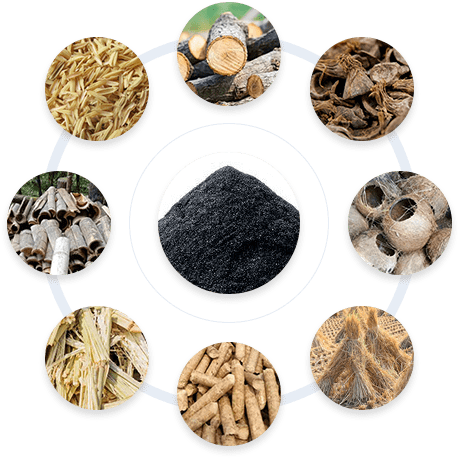
With the development of the palm oil industry, the palm kernel shell charcoal machine has great potential. It converts biomass residues, including palm kernel shells and fibers, into charcoal through carbonization. The palm shell continuous carbonization furnace produced by Dingli Group can turn these seemingly useless palm shells into high-quality palm charcoal, turning waste palm shells into treasures.

Carbonization process of palm kernel shell:
After the treatment of the rotary dryer, the palm kernel shells will be dried to about 12%, and the remaining moisture will be dried first. As the temperature continues to rise, after the moisture in the palm shell evaporates, it enters the dry distillation and carbonization process. The dry distillation and carbonization must be carried out under reducing gas and a certain temperature, and there must be enough time. Palm shell dry distillation temperature is 600 degrees Celsius, and the time is 40-60 minutes. After dry distillation, the palm shell remains fixed charcoal. The strength and density of palm shell charcoal are relatively strong. The carbonization temperature should be guaranteed to be above 600 degrees Celsius. The higher the temperature, the shorter the carbonization time. The above process is carried out continuously in the environmental protection carbonization machine. The carbonized palm shell is discharged from the discharge port of the carbonization machine and cooled rapidly to prevent oxidation. The cooled palm shell charcoal can be directly packaged and put into storage.
The palm shell carbonization machine can produce continuously for 24 hours, realize continuous carbonization with continuous feeding, break through the problem that traditional carbonization equipment cannot be continuously carbonized, and greatly improve production efficiency. This machine is equipped with an intelligent control cabinet and adopts an intelligent control system. It greatly saves the labor force, and has moved from the traditional manual workshop to the rapid development of high efficiency, automation and intelligence.
We are delighted to announce that Dingli Group will be participating in the upcoming PalmEX to be held in Jakarta, Indonesia.
A continuous biomass carbonization plant is an innovative solution for transforming agricultural residues and forestry waste into renewable energy products. By utilizing pyrolysis technology, the plant converts organic materials into biochar, combustible
Agricultural waste recycling has become a critical component of modern environmental management. A biomass continuous carbonization machine transforms crop residues into valuable biochar, providing a sustainable alternative to open burning and landfill di
A continuous biochar production line combining carbonization and pyrolysis technology represents a modern approach to biomass processing. Continuous carbonization equipment functions as the core unit within this system, ensuring stable throughput and cons