Focus on carbon equipment
Focus on carbon equipment


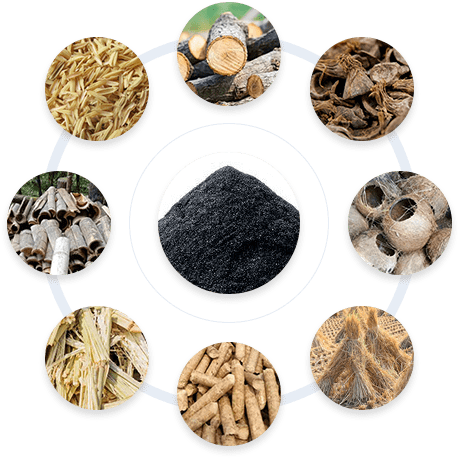
"How to choose raw materials to produce biochar with high adsorption performance?" Raw materials are certainly the cornerstone - wood rich in lignin, cellulose-tough straw, or hard materials such as fruit shells can often build a more developed porous skeleton. However, the soul shaper that truly gives biochar excellent adsorption performance is the core equipment: biochar carbonization machine.
A biochar carbonization machine with excellent performance becomes the "chief engineer" of adsorption performance through precise temperature control. It can achieve precise control within the critical pyrolysis temperature range (usually 400-700°C). If the temperature is too low, the raw materials cannot be fully pyrolyzed and the pore structure is difficult to form; if the temperature is too high, the formed pores may collapse or sinter. The precise control of temperature by the carbonization machine directly determines the degree of development of micropores and mesopores inside the biochar, which is the physical basis of adsorption capacity.

On this basis, uniform heating is another core capability of the carbonization machine. Advanced reactor designs (such as continuous rotary kilns and fluidized beds) combined with optimized hot air circulation systems ensure that raw material particles are evenly heated during the pyrolysis process, avoiding local overheating, insufficient carbonization or excessive carbonization. This consistency is the key to ensuring that the entire batch of biochar has high and stable adsorption performance, avoiding uneven product performance due to uneven heating.
At the same time, the meticulous management of residence time and cooling process is also crucial. The carbonizer accurately controls the residence time of the material in the optimal reaction temperature zone to ensure that the pyrolysis reaction is fully completed. The subsequent rapid and controllable cooling process is like instantly "setting" the "soft" pore structure formed at high temperature, effectively preventing the pore structure from collapsing during the slow cooling process and locking in high adsorption activity.
Therefore, selecting raw materials is drawing a blueprint, and advanced biochar carbonizers are precision tools that transform blueprints into high adsorption performance reality. Its precise coordination of temperature, atmosphere, time and cooling process directly "carves" a well-developed pore network inside the biochar, activating its powerful adsorption soul. Investing in and optimizing the carbonization process is the only way to unlock the high-efficiency adsorption potential of biochar.
We are delighted to announce that Dingli Group will be participating in the upcoming PalmEX to be held in Jakarta, Indonesia.
A continuous biomass carbonization plant is an innovative solution for transforming agricultural residues and forestry waste into renewable energy products. By utilizing pyrolysis technology, the plant converts organic materials into biochar, combustible
Agricultural waste recycling has become a critical component of modern environmental management. A biomass continuous carbonization machine transforms crop residues into valuable biochar, providing a sustainable alternative to open burning and landfill di
A continuous biochar production line combining carbonization and pyrolysis technology represents a modern approach to biomass processing. Continuous carbonization equipment functions as the core unit within this system, ensuring stable throughput and cons