Focus on carbon equipment
Focus on carbon equipment


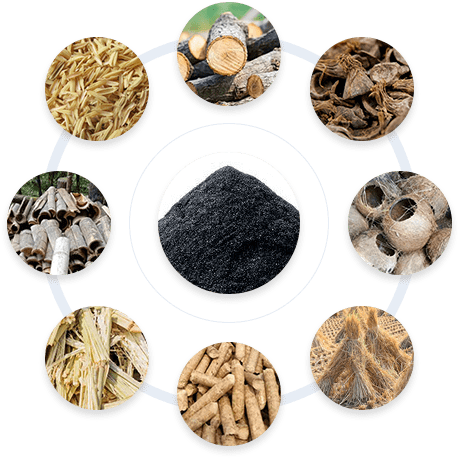
The profitability of nut shell carbonization machines is deeply rooted in the growing market demand for biochar and the high added value of its products.

Globally, the concepts of sustainable development and the circular economy are gaining popularity, driving a surge in demand for biochar as a green fuel and environmentally friendly soil conditioner. Agriculture uses it to enhance soil carbon sequestration and improve fertility, while industrial users seek it as a clean alternative to fossil fuels. This has created a stable and expanding market for nut shell charcoal products.
Furthermore, the nut shell carbonization process not only produces the primary product, biochar, but also efficiently recovers a valuable byproduct—wood vinegar. This natural liquid, rich in organic acids and phenols, has widespread applications in agriculture (as a natural fungicide, foliar fertilizer, and growth promoter) and the chemical industry, creating an additional revenue stream and significantly improving the overall project's economic return.
Investing in a nut shell carbonization machine is a wise choice to capitalize on market trends, fully tap the value of waste resources, and achieve substantial comprehensive returns. The broad market prospects and diverse product value create strong profit potential.
We are delighted to announce that Dingli Group will be participating in the upcoming PalmEX to be held in Jakarta, Indonesia.
A continuous biomass carbonization plant is an innovative solution for transforming agricultural residues and forestry waste into renewable energy products. By utilizing pyrolysis technology, the plant converts organic materials into biochar, combustible
Agricultural waste recycling has become a critical component of modern environmental management. A biomass continuous carbonization machine transforms crop residues into valuable biochar, providing a sustainable alternative to open burning and landfill di
A continuous biochar production line combining carbonization and pyrolysis technology represents a modern approach to biomass processing. Continuous carbonization equipment functions as the core unit within this system, ensuring stable throughput and cons