Focus on carbon equipment
Focus on carbon equipment


Faced with global resource and environmental challenges, seeking sustainable development has become a consensus. The coconut shell carbonization machine is precisely such a key that can unlock the door to a circular economy, transforming a linear consumption model into a recycling model, demonstrating enormous ecological and commercial potential.

Its working principle is essentially the intelligent reconstruction of material form. Through pyrolysis technology, it removes volatile substances from the coconut shell without damaging the carbon skeleton structure, ultimately obtaining coconut shell char with a very high fixed carbon content. This process is efficient and clean, maximizing the preservation of the raw material's intrinsic value.
The resulting coconut shell char has extremely wide applications. It is not only a high-performance fuel and soil conditioner, but also an excellent raw material for producing activated carbon. This means that a discarded coconut shell, empowered by the carbonization machine, can be recycled into multiple systems such as industry and agriculture, continuously creating value.
It can be said that the coconut shell carbonization machine is an important tool for realizing the vision of "zero-waste production." It makes the best use of every resource, reduces dependence on virgin forests and mineral resources, and lowers carbon emissions. Investing in such a machine is not just investing in equipment, but investing in a resource-sustainable and environmentally friendly future. It demonstrates that development and environmental protection can go hand in hand.
We are delighted to announce that Dingli Group will be participating in the upcoming PalmEX to be held in Jakarta, Indonesia.
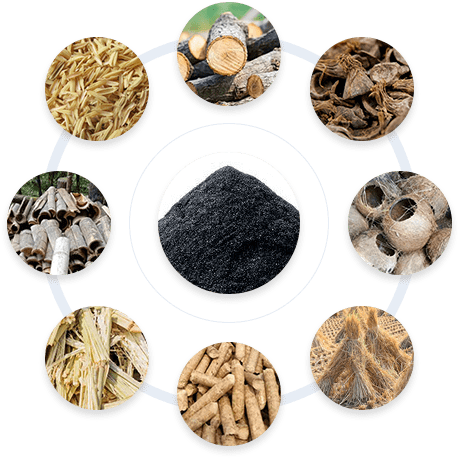
A continuous biomass carbonization plant is an innovative solution for transforming agricultural residues and forestry waste into renewable energy products. By utilizing pyrolysis technology, the plant converts organic materials into biochar, combustible
Agricultural waste recycling has become a critical component of modern environmental management. A biomass continuous carbonization machine transforms crop residues into valuable biochar, providing a sustainable alternative to open burning and landfill di
A continuous biochar production line combining carbonization and pyrolysis technology represents a modern approach to biomass processing. Continuous carbonization equipment functions as the core unit within this system, ensuring stable throughput and cons