Focus on carbon equipment
Focus on carbon equipment


In the vast landscape of resource regeneration, biomass carbonization machines play a core driving role. Transcending the scope of mere environmental protection equipment, they become mobile "mini-factories," transforming scattered biomass resources into high-value commodities and driving the gears of the circular economy.

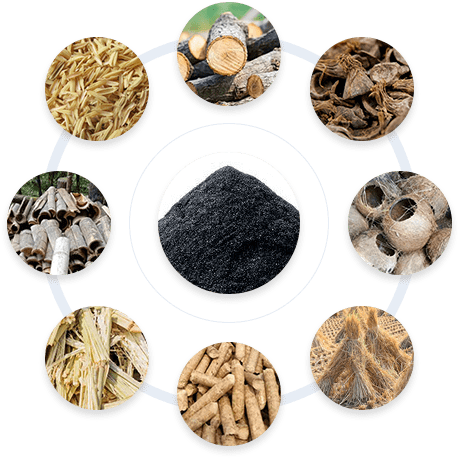
Its value lies in creating a completely new value chain. Through standardized and continuous operations, it uniformly transforms scattered and varied agricultural and forestry waste into stable and widely applicable biochar. This transformation lays a solid foundation for subsequent industrial applications and opens up vast market opportunities.
The resulting economic chain is full of potential. Biochar can serve as a clean energy source, replacing some fossil fuels; it can be used as an industrial raw material in metallurgy, chemicals, and other fields; and its processed products are emerging in high-end markets such as environmental protection and pharmaceuticals. It completely transforms what was once a cost center into a profit center.
Therefore, biomass carbonization machines are not only a manifestation of technology but also a catalyst for new economic models. While protecting the environment, it has created considerable economic benefits and employment opportunities, injecting strong and lasting momentum into rural industrial revitalization and the green transformation of regional economies.
We are delighted to announce that Dingli Group will be participating in the upcoming PalmEX to be held in Jakarta, Indonesia.
A continuous biomass carbonization plant is an innovative solution for transforming agricultural residues and forestry waste into renewable energy products. By utilizing pyrolysis technology, the plant converts organic materials into biochar, combustible
Agricultural waste recycling has become a critical component of modern environmental management. A biomass continuous carbonization machine transforms crop residues into valuable biochar, providing a sustainable alternative to open burning and landfill di
A continuous biochar production line combining carbonization and pyrolysis technology represents a modern approach to biomass processing. Continuous carbonization equipment functions as the core unit within this system, ensuring stable throughput and cons