Focus on carbon equipment
Focus on carbon equipment


In the global trend of advocating energy conservation and environmental protection, biomass carbonizers have become crucial equipment for promoting green recycling. Through carbonization, they transform agricultural waste, forestry byproducts, and processing residues into high-value-added biochar, thus forming new resource chains in environmental protection, agriculture, and industry.
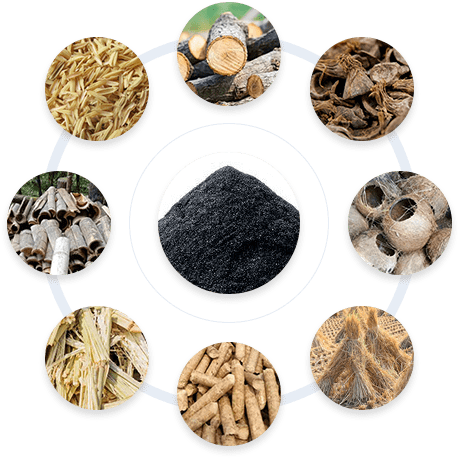
The biggest feature of biomass carbonizers is their ability to turn waste into valuable charcoal. Long-term stockpiling of wood waste, bamboo shavings, coconut shells, coffee grounds, etc., not only takes up space but can also cause pollution. Through the carbonization process of charcoal making machines, these materials can be quickly processed into stable solid carbon products, making them easier to store or reuse.

With the promotion of green energy and sustainable development concepts, industries around the world are building resource recycling systems. Carbonization equipment not only improves the efficiency of biomass utilization but also reduces dependence on traditional fossil fuels. From an application value perspective, it is an important tool for agricultural resource regeneration, rural industrial upgrading, and environmental governance.
In the future, as Chinese biomass equipment manufacturers continue to launch intelligent and low-energy-consumption products, carbonization machines will be applied to more production scenarios. It is not just a piece of equipment, but a key driving force for promoting green manufacturing and the circular economy.
We are delighted to announce that Dingli Group will be participating in the upcoming PalmEX to be held in Jakarta, Indonesia.
A continuous biomass carbonization plant is an innovative solution for transforming agricultural residues and forestry waste into renewable energy products. By utilizing pyrolysis technology, the plant converts organic materials into biochar, combustible
Agricultural waste recycling has become a critical component of modern environmental management. A biomass continuous carbonization machine transforms crop residues into valuable biochar, providing a sustainable alternative to open burning and landfill di
A continuous biochar production line combining carbonization and pyrolysis technology represents a modern approach to biomass processing. Continuous carbonization equipment functions as the core unit within this system, ensuring stable throughput and cons