Focus on carbon equipment
Focus on carbon equipment


EFB (Empty Fruit Bunch of Oil Palm), a high-volume agricultural byproduct, has long posed challenges in terms of accumulation and disposal in many countries. The emergence of the EFB biomass carbonization machine has opened up a brand-new green path for biomass resource utilization, transforming resources from disorderly stockpiling to high-value reuse.

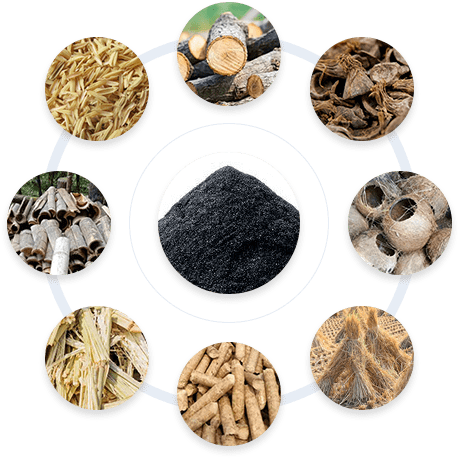
The EFB carbonization machine converts the bulky and lightweight EFB raw material into biochar fuel with high fixed carbon content and easy transportability through the carbonization process. This product is not only stable for storage but can also be used as an agricultural, energy, or industrial material, providing new raw material options for multiple industries. For businesses, this not only reduces the problem of waste accumulation but also brings additional product value, significantly improving overall economic benefits.
Against the backdrop of continuously increasing demand for sustainable energy, more and more companies are choosing to introduce EFB charcoal making equipment. It not only improves biomass utilization efficiency but also promotes the construction of a regional green circular system, returning resources to the industrial chain and forming long-term value.
In the future, EFB carbonization machines will continue to develop towards greater efficiency, environmental friendliness, and intelligence. With the increasing international market demand for biochar, EFB carbonization equipment will play a greater role in green energy, agricultural recycling, and environmental protection industries, providing important support for the global response to resource pressure.
We are delighted to announce that Dingli Group will be participating in the upcoming PalmEX to be held in Jakarta, Indonesia.
A continuous biomass carbonization plant is an innovative solution for transforming agricultural residues and forestry waste into renewable energy products. By utilizing pyrolysis technology, the plant converts organic materials into biochar, combustible
Agricultural waste recycling has become a critical component of modern environmental management. A biomass continuous carbonization machine transforms crop residues into valuable biochar, providing a sustainable alternative to open burning and landfill di
A continuous biochar production line combining carbonization and pyrolysis technology represents a modern approach to biomass processing. Continuous carbonization equipment functions as the core unit within this system, ensuring stable throughput and cons