Focus on carbon equipment
Focus on carbon equipment


Most of the drinks, beer, cola, etc. that everyone usually drinks are in cans. How to remove the paint on the surface of cans for aluminum recycling?
There are many ways to remove it with chemicals, which can dissolve or corrode the paint layer on the surface of the can. The advantage of this method is that it is highly efficient and suitable for large-scale paint removal, but it requires attention to safety to avoid chemicals causing harm to the human body, and the smell is very harmful to the body. So basically this is not recommended.
There is also mechanical paint stripping, which is the most primitive and stupid method, using mechanical tools such as grinding wheels, shovels, and wire brushes to grind or scrape off the paint layer on the surface of the can. The advantage of this method is that it has good paint removal effect and does not require the use of chemicals, but it requires manual operation and is less efficient.

So the last one is the high-temperature carbonization pyrolysis furnace paint stripping that the editor is going to talk about. This equipment is also a new type of paint stripping furnace equipment that has been produced in the past two years. The cans must be broken, and then passed through the conveyor into the continuous pyrolysis furnace for oxygen-free carbonization. Note; (the equipment needs to be preheated before feeding). This can remove the paint on the surface of the cans. The time from the raw material entering the pyrolysis furnace to the discharge of the recycled aluminum material is about 30 minutes. This completes the thermal paint removal furnace.
We are delighted to announce that Dingli Group will be participating in the upcoming PalmEX to be held in Jakarta, Indonesia.
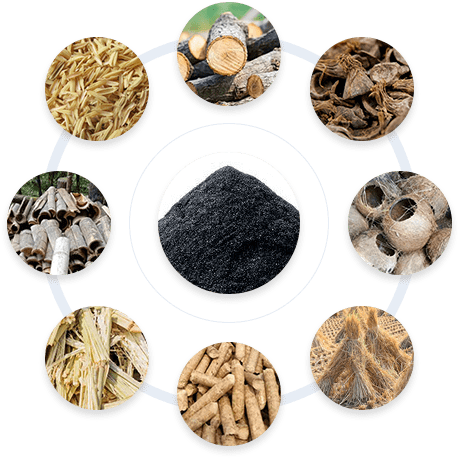
A continuous biomass carbonization plant is an innovative solution for transforming agricultural residues and forestry waste into renewable energy products. By utilizing pyrolysis technology, the plant converts organic materials into biochar, combustible
Agricultural waste recycling has become a critical component of modern environmental management. A biomass continuous carbonization machine transforms crop residues into valuable biochar, providing a sustainable alternative to open burning and landfill di
A continuous biochar production line combining carbonization and pyrolysis technology represents a modern approach to biomass processing. Continuous carbonization equipment functions as the core unit within this system, ensuring stable throughput and cons