Focus on carbon equipment
Focus on carbon equipment


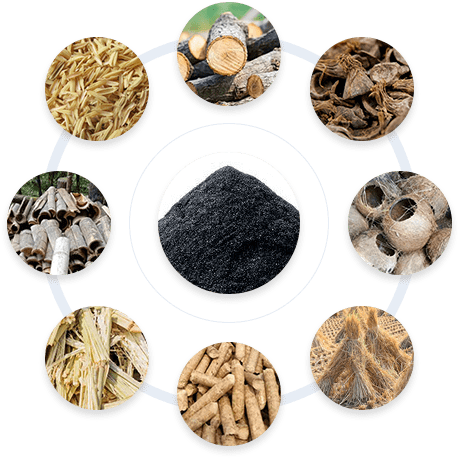
Autumn is a harvest season. There are a large number of wild dates and wild walnuts in rural areas and mountainous areas that are left unpicked and discarded in the fields. After the olive pulp is always eaten, the olive pit is also thrown away. Smart bosses discovered business opportunities. Most people in the South love to drink tea, so how do these discarded fruit shells become carbon for making tea?
Continuous drum carbonization furnace;
The drum carbonization furnace is also called a continuous carbonization furnace. The continuous drum carbonization furnace is evenly heated, has fast heat transfer and uniform carbonization. It can carbonize 3-5 tons of materials per hour on average, which is 10-20 times the production efficiency of the static carbonization furnace.

When the equipment first starts heating, it needs a heat source to heat the carbonization furnace. When the temperature is reached, the material starts to be fed into the continuous carbonization furnace through the conveyor. During the entire carbonization process, the discarded fruit shells are in an oxygen-free carbonization state in the furnace and can be automatically discharged in about 30 minutes. After cooling, the production of complete fruit shell carbon has been completed.
This equipment is an all-in-one drying and carbonizing machine that can produce materials regardless of whether they are dry or wet. And the output size can be customized according to customer needs.
We are delighted to announce that Dingli Group will be participating in the upcoming PalmEX to be held in Jakarta, Indonesia.
A continuous biomass carbonization plant is an innovative solution for transforming agricultural residues and forestry waste into renewable energy products. By utilizing pyrolysis technology, the plant converts organic materials into biochar, combustible
Agricultural waste recycling has become a critical component of modern environmental management. A biomass continuous carbonization machine transforms crop residues into valuable biochar, providing a sustainable alternative to open burning and landfill di
A continuous biochar production line combining carbonization and pyrolysis technology represents a modern approach to biomass processing. Continuous carbonization equipment functions as the core unit within this system, ensuring stable throughput and cons