Focus on carbon equipment
Focus on carbon equipment


Today, with the increasing awareness of environmental protection, the fruit shell charcoal machine is gradually becoming more and more popular as an environmentally friendly and economically beneficial equipment. This article will introduce in detail the characteristics, application fields and future development trends of nutshell charcoal machines to help everyone better understand this emerging industry.

1. Characteristics of Nutshell Charcoal Machine
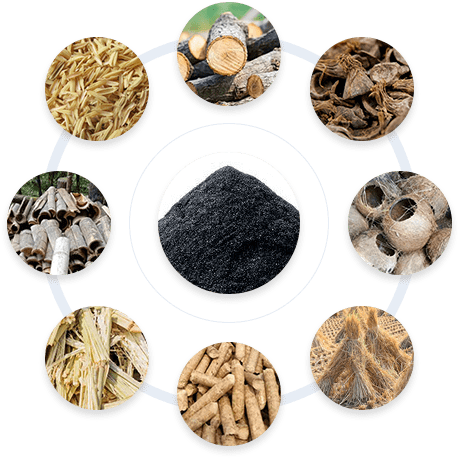
The fruit shell charcoal machine is a device that uses biomass raw materials such as waste fruit shells and sawdust to produce charcoal. It has the following characteristics:
Environmentally friendly: The fruit shell charcoal machine can turn discarded fruit shells, sawdust, etc. into treasure, reducing the pressure of garbage on the environment. At the same time, the charcoal produced can replace traditional fossil fuels and reduce greenhouse gas emissions such as carbon dioxide.
Efficient: The Nutshell charcoal machine adopts advanced production technology and has the advantages of high production efficiency and low energy consumption, and can achieve large-scale production.
Flexible: The fruit shell charcoal machine can flexibly adjust the production scale according to market demand to meet the needs of different customers.
Automation: The Nutshell charcoal machine adopts an automated control system, which can realize unattended, remote monitoring and other functions to improve production efficiency.
In short, as an environmentally friendly and economically beneficial equipment, the nutshell charcoal machine has broad development prospects. In the next few years, with the superposition of advantages such as continuous technological innovation, industrial clustering, international market development, and policy support, the nutshell charcoal machine industry will usher in a better tomorrow.
We are delighted to announce that Dingli Group will be participating in the upcoming PalmEX to be held in Jakarta, Indonesia.
A continuous biomass carbonization plant is an innovative solution for transforming agricultural residues and forestry waste into renewable energy products. By utilizing pyrolysis technology, the plant converts organic materials into biochar, combustible
Agricultural waste recycling has become a critical component of modern environmental management. A biomass continuous carbonization machine transforms crop residues into valuable biochar, providing a sustainable alternative to open burning and landfill di
A continuous biochar production line combining carbonization and pyrolysis technology represents a modern approach to biomass processing. Continuous carbonization equipment functions as the core unit within this system, ensuring stable throughput and cons