Focus on carbon equipment
Focus on carbon equipment



All internal structures of Dingli® Nut Shell Continuous Carbonization Furnace are made of special high-temperature-resistant materials, which can ensure that it will not deform or oxidize at high temperatures, and it will run continuously and stably. It is safe and reliable, creating a continuous drum carbonization process. The advanced level of the equipment industry.

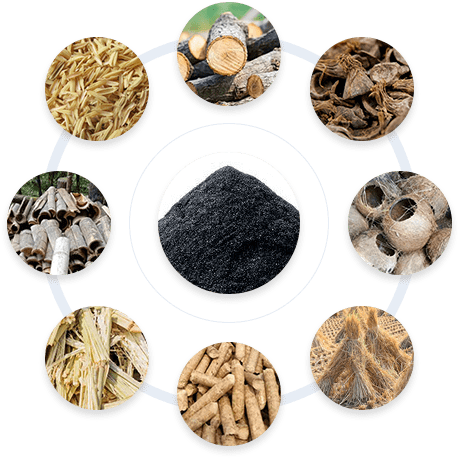
The nut shells enter the carbonization furnace body through the conveying equipment, and are transformed into nutshell charcoal under the action of the high-temperature anaerobic environment in the furnace body, and are transported out through the cooling and conveying equipment. The high-temperature flue gas generated in the furnace body is reused as a heat source through a self-recovery system .
Dingli® Nut Shell Continuous Carbonization Furnace can selectively and automatically separate and discharge wood tar and wood acetic acid. Wood tar contains more than 300 kinds of chemical elements. It is an important chemical raw material: waterproof, anticorrosion and high temperature resistance in the shipbuilding industry good material. It can be used as chemical and pharmaceutical raw materials and plant nutrition to regulate auxin. It has growth effect on plants and good insecticidal effect.
Dingli Group is a professional manufacturer of rotary dryers and smokeless drum carbonization equipment. If you want to know more about the equipment, please leave a message for consultation.
With the growing global demand for high-quality activated carbon in water treatment, air purification, food processing, and industrial applications, coconut shells have become an ideal raw material due to their high carbon content, low ash content, and ex
Dingli Group was recently invited to attend the 3rd International Conference on Biochar Research and Application and the 2026 IBI Biochar World Congress. There, the company engaged with global experts, scholars, and industry representatives to explore new
The Hardwood Carbonization Furnace is an advanced solution designed for converting hardwood logs, branches, wood chips, and other woody biomass materials into high-quality charcoal through an efficient carbonization process.
From August 7 to 10, 2026, a major global event in the biochar field—the 3rd International Conference on Biochar Research and Application and the 2026 IBI Biochar World Congress—will be grandly held in Zhengzhou, China.