Biomass Pellets Torrefaction Machine
Capacity
300-4500 kg/h
Heat Source
Diesel/Gas/Etc.
Customized
Yes

Capacity
300-4500 kg/h
Heat Source
Diesel/Gas/Etc.
Customized
Yes
Dingli Biomass Pellets Torrefaction Machine is developed to convert densified “white” biomass pellets into “black” torrefied pellets. The complete torrefaction plant is designed and built by our company, while the torrefaction reactor and the process adopt the patented technology from our strategic partner. The technology provides the opportunity to torrefy “white” biomass pellets directly with minimal dust and small particles, thus safeguarding the quality of torrefied “black” pellets to meet international standard, while optimizing the overall energy consumption of the complete plant.
We have a design and research team that leverages the newest technologies to bring compact and highly convenient solutions to a wide range of users.
Our unique design and compact torrefied pellet machine can help you torrefy your white biomass pellets without causing significant pollution. This makes our machines eco-friendly and meets the global standards in terms of pellets and machine quality. Our machines also consume comparatively low energy.
Superior Performance of Torrefied Wood PelletsWith a higher energy density, less water content, pure composition, torrefied wood pellet has a lot of advantagescomparing with wood pellets and even coal.
1. With a higher energy density, torrefied wood pellets performs more efficiently than common wood pellets inpower plant to replace coal.
2. With less water content, it is not easy to get damp, thus to save longer.
3. Torrefied wood pellet is a carbon neutral product. No polluting gases is be released during its burning.
4. After torrefied, biomass materials turn out to have a higher grindability index and they are easier to pelletizeby biomass pellet mill.
5. More dense, the shipping cost of torrefied wood pellets is less than that of wood pellets.

It consists of torrefaction reactor (without counting the upper and lower hoppers), a white biomass pellets feeding system, a hot gas distribution system, a heating system, a cooling system and an Artificial Intelligence (AI) powered process control system with internet access.

| Model | Diameter(mm) | The drum length(m) | Carbon capacity(kg/h) | Drum speed(rpm) | Dimension(m) |
| DLTJ1010 | 1000 | 10 | 100-200 | 1.5-2.5 | 10.0*1.7*2.8 |
| DLTJ1210 | 1200 | 10 | 200-300 | 1.5-2.5 | 10.0*2.0*3.0 |
| DLTJ1410 | 1400 | 10 | 400-500 | 1.5-2.5 | 10.0*2.2*3.2 |
| DLTJ1612 | 1600 | 12 | 600-800 | 2.0-3.0 | 10.0*2.4*3.5 |
| DLTJ1912 | 1900 | 12 | 900-1100 | 2.0-3.0 | 12.0*2.8*3.8 |
| DLTJ2212 | 2200 | 12 | 1200-1500 | 2.0-3.0 | 12.0*3.2*4.2 |
| DLTJ2512 | 2500 | 12 | 1600-2000 | 2.0-3.0 | 12.0*3.5*4.5 |
| DLTJ3012 | 3000 | 12 | 2200-2600 | 2.0-3.0 | 12.0*4.0*5.0 |
| DLTJ3612 | 3600 | 12 | 3000-3800 | 2.0-3.0 | 12.0*4.6*5.6 |
Selling is not the end. True service has just begun.

We offer free exclusive customized production solutions with dedicated one-on-one technical support. Based on your specific needs, we provide professional layout planning and resolve all your concerns from the very beginning.
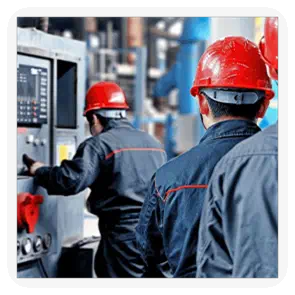
Our professional engineers arrive on-site to handle full equipment installation, commissioning, and debugging. We provide hands-on practical training and continuous guidance throughout the process, ensuring your equipment achieves rapid production ramp-up and runs smoothly and efficiently.
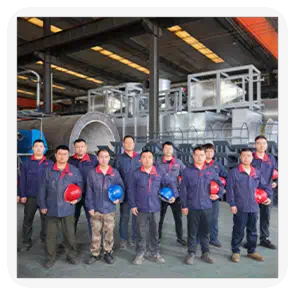
We provide a comprehensive one-stop after-sales service, including regular equipment inspections, daily maintenance, troubleshooting, and rapid response to any needs. Our goal is to ensure the long-term, stable, and efficient operation of your equipment.
Capable of carbonizing biomass with moisture content below 20% and particle size under 30mm, suitable for a wide range of common biomass types.
Produces high‑quality carbon with excellent carbonization rate. The resulting carbon products can be used not only as fuel, but also as raw materials for agricultural carbon, metallurgical carbon, and activated carbon.
Strong carbonization depth control capability. The residual volatile matter of the final charcoal can be precisely adjusted between 10‑25% according to different industrial requirements.
Enables adjustable carbonization depth and volatile content to meet varied industrial requirements while maintaining high carbonization efficiency.
From solution design to equipment manufacturing, and on-site installation and commissioning, we deliver comprehensive one-stop services. Our equipment has been successfully exported to over 100 countries and regions, including the UK, Russia, Malaysia, the Philippines, Italy, Israel, Indonesia, Ethiopia, Nigeria, Congo, South Africa, Pakistan, India, Egypt, and many others. We look forward to partnering with you. Below are the project site of our valued clients.